

“Entre Gigantes: uma experiência no Museu Nacional” will be on view until August 31
The Museu Nacional/UFRJ and the partners of the Museu Nacional Vive Project (a technical cooperation between UFRJ, UNESCO, and the Vale Cultural Institute) present the temporary exhibition “Entre Gigantes: uma experiência no Museu Nacional”.
This initiative invites the public to temporarily access — for the first time since the 2018 fire — three indoor areas of the museum’s headquarters, the Paço de São Cristóvão, which is currently under restoration. From July 2 to August 31, visitors will be able to witness the progress of the palace’s restoration, revisit an iconic piece of the collection — the Bendegó meteorite — and admire a recent acquisition of the institution: the skeleton of a sperm whale, measuring 15.7 meters in length, now installed under the building’s new skylight.
“This is a program that highlights the resilience of the Museum’s staff, the excellence of the ongoing restoration efforts, and, of course, the scientific relevance of our collections in expanding access to knowledge. It is a historic moment: to be able — even if for a short time — to open a small part of the palace for visitation! The entire society is invited to take part in this new phase of the Museum,” says Alexander Kellner, Director of the National Museum/UFRJ.
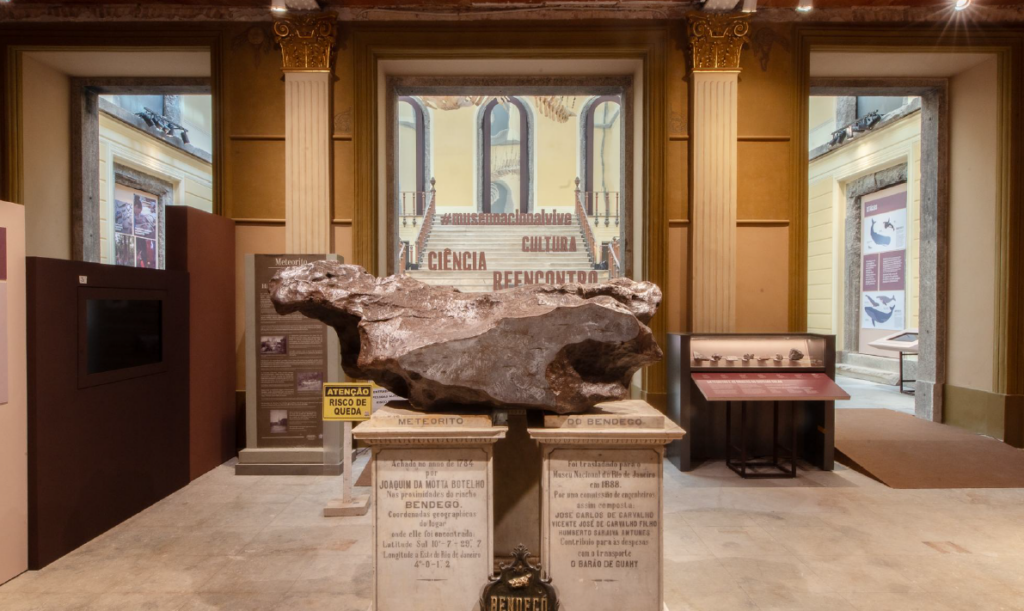
For Lucia Basto, Executive Manager of the Museu Nacional Vive Project, “it is also an opportunity to reflect on the achievements and challenges of this reconstruction. In addition to the skylight over the monumental staircase, visitors will also be able to admire some restored artistic elements in the Bendegó Room which, even before the fire, had been hidden under layers of paint,” she reveals.
The experience proposes a journey that interweaves nature, heritage, and art. The Bendegó — a giant weighing over five tons — and other specimens from the meteorite collection are the starting point. In this first phase, visitors will also encounter artworks by Gustavo Caboco, a Wapichana visual artist, who reinterpreted the meteorite to create a series of artistic pieces together with his family.
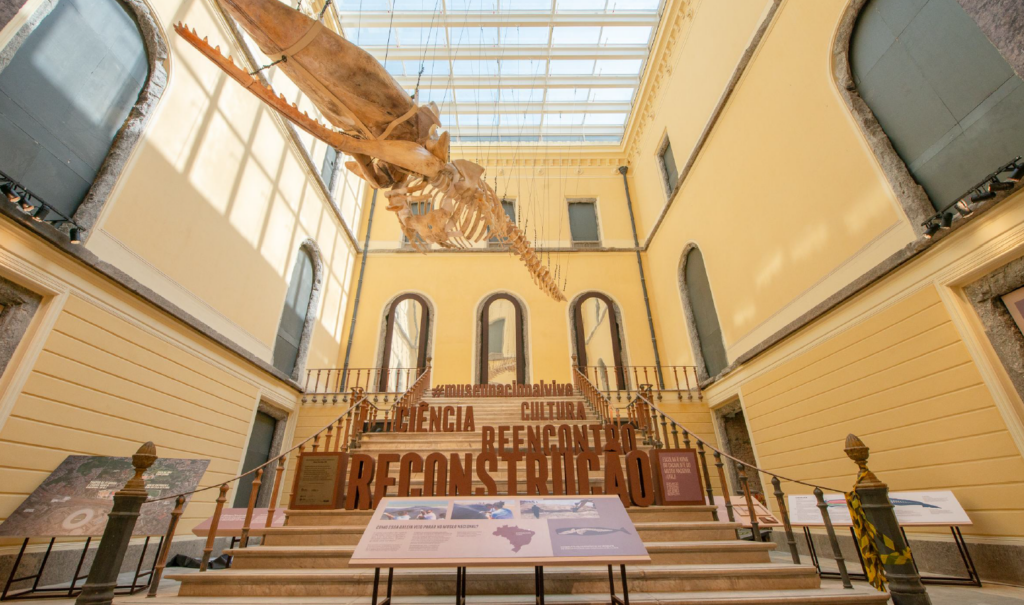
In the courtyard of the monumental staircase, the viewing of the sperm whale is the result of a specialized restoration and biological material preparation process that lasted about two months. It involved procedures such as bone consolidation, painting, and even the replacement of some skeletal structures of the cetacean. The assembly and installation of the pieces, which total around three tons, were also part of this effort. The Museum is launching a campaign inviting the public to help name the sperm whale — the largest of its kind ever exhibited in South America.
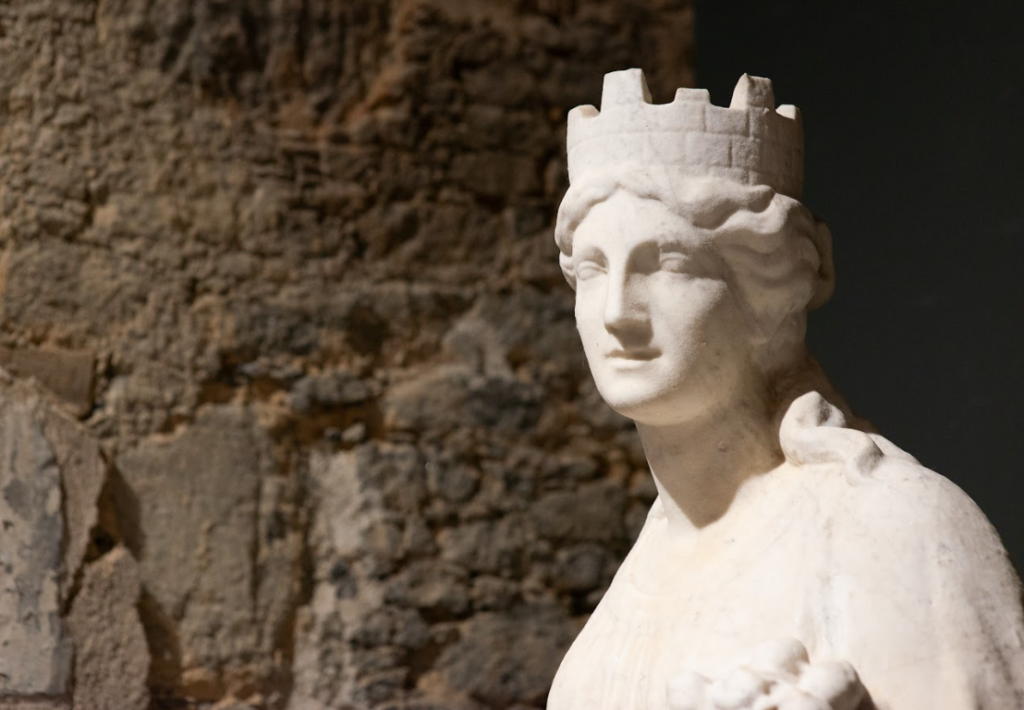
The third and final room is dedicated to the history of the Museum and the reconstruction of the palace, highlighting architectural and restoration aspects, and displaying original items such as two Carrara marble sculptures; both original and replica artistic ornaments; and a series of images documenting the daily work at the construction site.
VISITOR INFORMATION
The Museum will be open for visits from Tuesday to Sunday, from July 2 to August 31. Admission is free, and tickets must be reserved in advance through the Sympla platform.
INSTITUTIONAL PARTNERS REAFFIRM THE IMPORTANCE OF THIS PROGRAM
The Rector of UFRJ, Roberto Medronho, emphasizes that “the National Museum is an institution that brings pride to Brazil, and not even the 2018 fire was capable of stopping its scientific research, production, and outreach, as this new experience clearly demonstrates.”
Mariângela Menezes, President of the Association of Friends of the National Museum (SAMN), states that “the dialogue with the many expressions of our culture and the development of educational initiatives like this one reaffirm the mission of the National Museum, which has been strengthened throughout this reconstruction process marked by collaboration between public and private sector partners.”
According to Marlova Jovchelovitch Noleto, Director and Representative of UNESCO in Brazil, the program “reaffirms the role of museums as spaces for education and dialogue. Furthermore, it combines heritage preservation with innovative architectural solutions, offering the public a unique experience that values both scientific knowledge and cultural richness.”
Hugo Barreto, Director of the Vale Cultural Institute, adds: “The reconstruction of the Museum is one of the largest cultural projects currently underway in the country. Temporary initiatives like this one, even while the building is still under restoration, are a sign of the shared commitment to keeping our most iconic Museum connected to its audience and to returning the institution fully to society as soon as possible.”